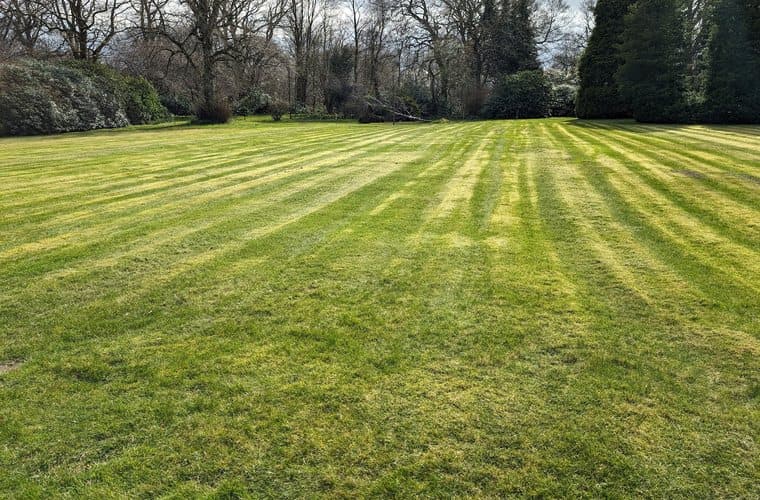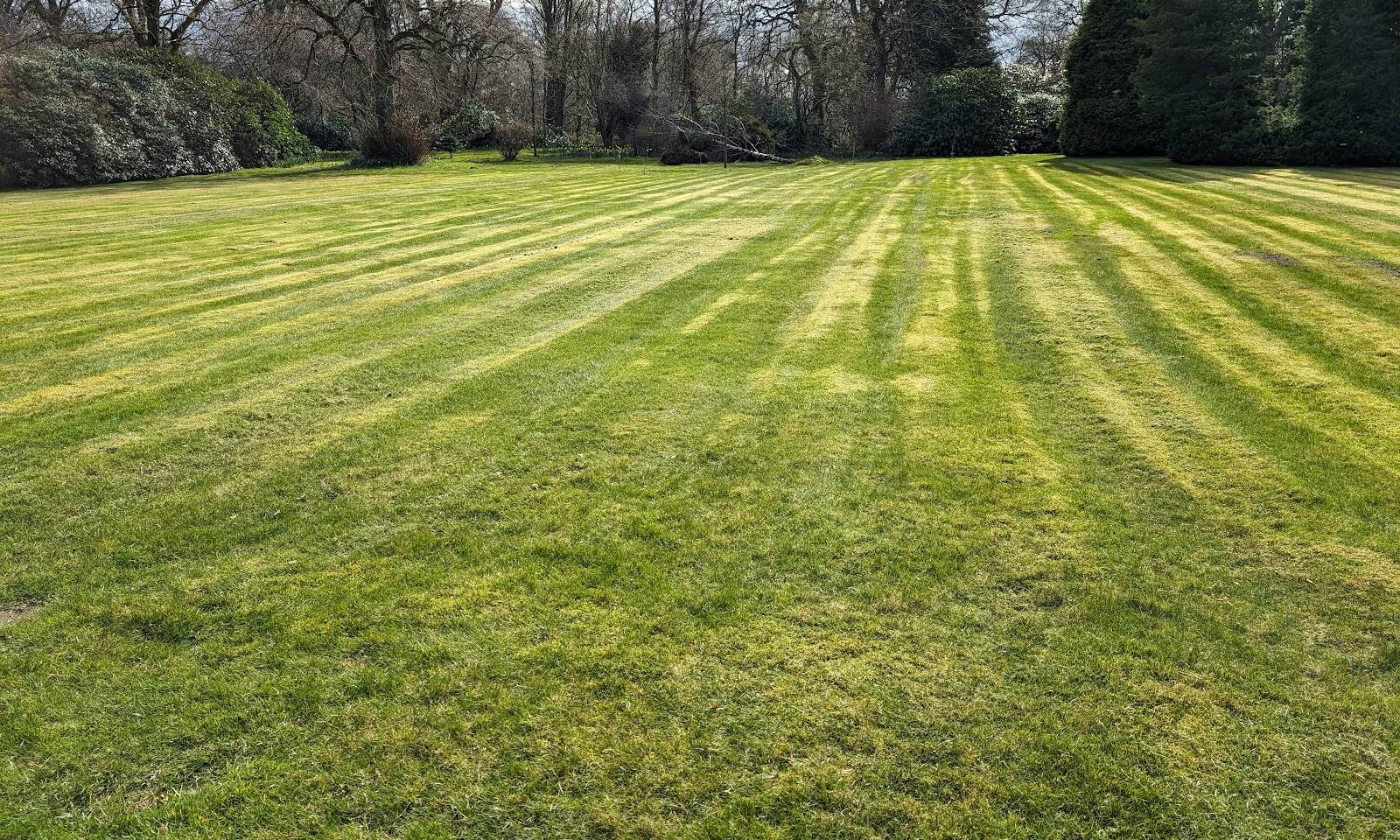
Wide parkland lawn mown in bold stripes with mature trees and conifers behind
  1. Home
  2. Services
  3. Grass cutting

Commercial grass cutting on a schedule set to the site

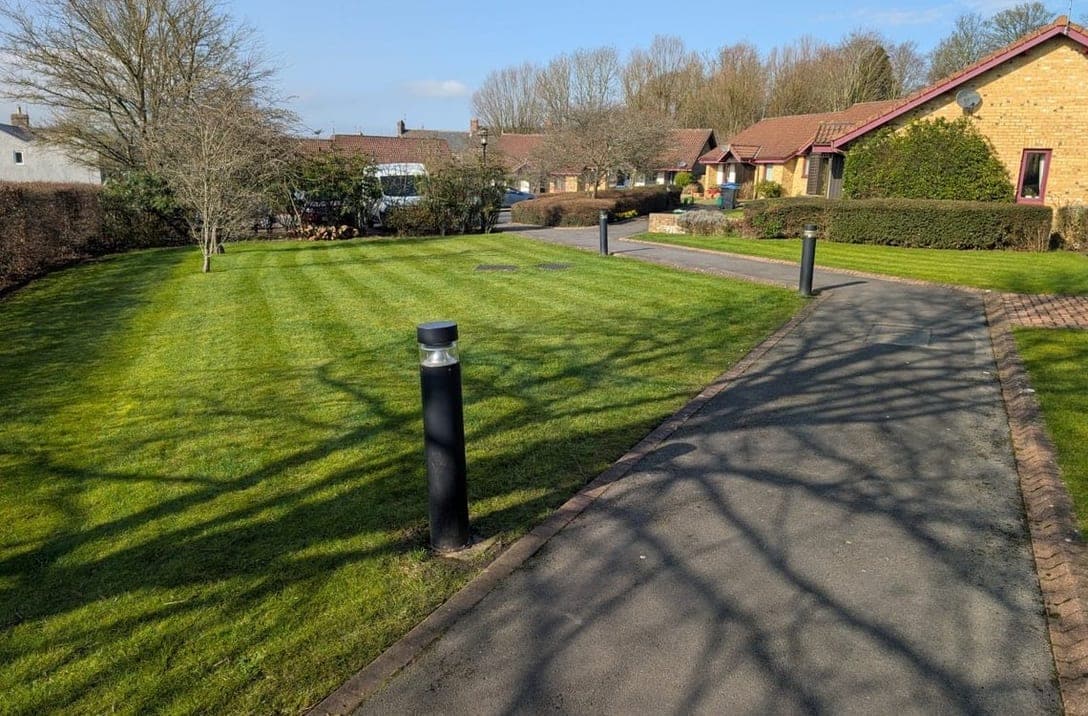
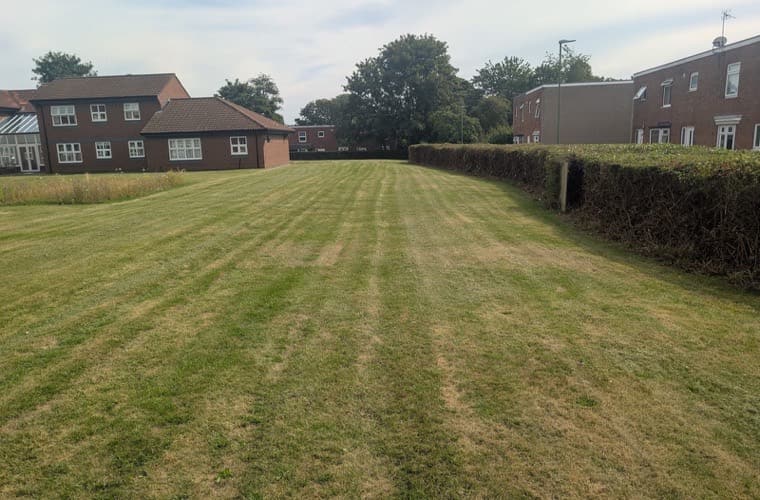
Verges, recreation grounds, communal lawns and business park frontages, from County Durham up to Newcastle. Cut, edged and strimmed every visit, by an owner who is on site doing the work.

star5.0 on Google

Who it is for

Grass that the public walks past every day

Grass is the cornerstone of the business. These are the sites it is mostly cut for, and domestic lawns are taken on as well.

account_balance Parish and town councils Highway verges, recreation grounds and ornamental lawns, cut often enough that nobody has to complain about them first.
apartment Managing agents and managed estates Communal lawns between blocks and along estate paths, cut to the frequency the residents are paying for.
business Business parks and industrial estates Frontages, verges and the strips of grass around units, where a missed cut shows straight away.
school Schools, care homes and cemeteries Grass cut around people, furniture and memorials, with the strimming done properly every visit.

What every visit includes

Cut, edged and strimmed, not just mown

A lawn only looks maintained when the edges and the awkward corners are done too. That is part of every visit, not an extra.

check_circleMowing, edging and strimming each visit
check_circleStrimming around posts, benches, play equipment, memorials and fence lines
check_circlePaths, beds and furniture edged back after the winter
check_circleAeration and feeding where the sward needs it
check_circleTurfing and new lawns from bare ground
check_circleLitter checked each visit and green waste taken off site
Lantra Awards Approved
Lantra Awards ApprovedCertified for the safe use of pesticides

Through the year

The cutting frequency follows the growth

A fixed fortnightly round is too slow in June and wasted in November. This is how the cuts move through the year.

local_florist March to May Fortnightly from the first cut, moving toward weekly as growth picks up into May. Spring bulbs are left to die back rather than cut off early.
calendar_month June to August A cut every seven to ten days through peak growth, tightened in a wet summer rather than left to catch up later.
park September to November Final cuts with the height lifted, so the grass goes into winter slightly longer and the crown is protected.
The covered timber deck Reggie built at a local school

Who cuts it

Reggie Tribuisis

Director, Reggie T Landscapes Ltd

Reggie has 15 years in the trade and set the company up in 2024. He prices the cutting, sets the frequency and is on site while it is cut. If a visit needs to move, you hear it from him.

“Reliable and well priced grass cutting service.” Alex Tranter, Google review. Every review on the profile is five stars.
Talk to Reggiearrow_forward

FAQs

Questions about the cutting

The things people ask before they hand over the grass. If yours is not here, ask on the call.

How often would you visit?expand_more
It changes through the year rather than staying fixed. Fortnightly from the first cut in spring, moving to every seven to ten days through peak growth in June and July, then easing off into autumn. The schedule is agreed and written down before the first visit.
What happens when it rains?expand_more
Grounds work is weather-led, so if a visit has to move it moves within the week rather than being dropped, and you are told before it happens rather than after.
Why is the grass left longer in autumn?expand_more
The last cuts of the year are done with the height lifted. Grass going into winter slightly longer has its crown protected, and it comes back stronger in spring.
Do you take on commercial and public sites?expand_more
Yes, and it is the core of the business: highway verges, recreation grounds and ornamental lawns, plus care homes, schools, industrial estates and cemeteries. Domestic work is taken on as well.
What happens to the green waste?expand_more
It is taken off site and disposed of responsibly rather than piled at the boundary. Wildflower meadow arisings are cut and collected rather than left, because leaving them enriches the soil and the flowers stop coming back.
What documents can you provide before we commit?expand_more
Insurance details, risk assessments, method statements and references, all on request. Company details are public: Reggie T Landscapes Limited, registered in England and Wales, number 15496162, registered office Unit 4 Plawsworth Road, Sacriston, Durham DH7 6JX.

Book a free call

Tell us what the site needs

Three short steps, then Reggie rings you back. No cost, no obligation, and you get a straight answer on what the site needs and what it would take to keep on top of it.

  1. 1What needs attentionTick what applies
  2. 2The site itselfType and rough size
  3. 3When to callName and number

What needs attention?

Tick anything that applies. It is fine to tick everything.

About the site

Rough is fine. The size guides are there so you do not have to measure anything.

When is a good time to call?

Reggie rings you back himself.

Prefer to talk? Call 07774 732804.

check_circle

That has come through

Reggie will give you a ring about the site.